How Do AI-Generated Visuals Hold a Brand's Visual Language?
AI-generated visuals hold a brand's visual language when the model works inside a predefined brand system and is bound to an art direction. What decides the outcome is not the prompt you write but the rules the AI generates within: color, typography, composition and style. When the rules are clear, AI adds speed and scale; when they are missing, every image looks like it came from a different brand.
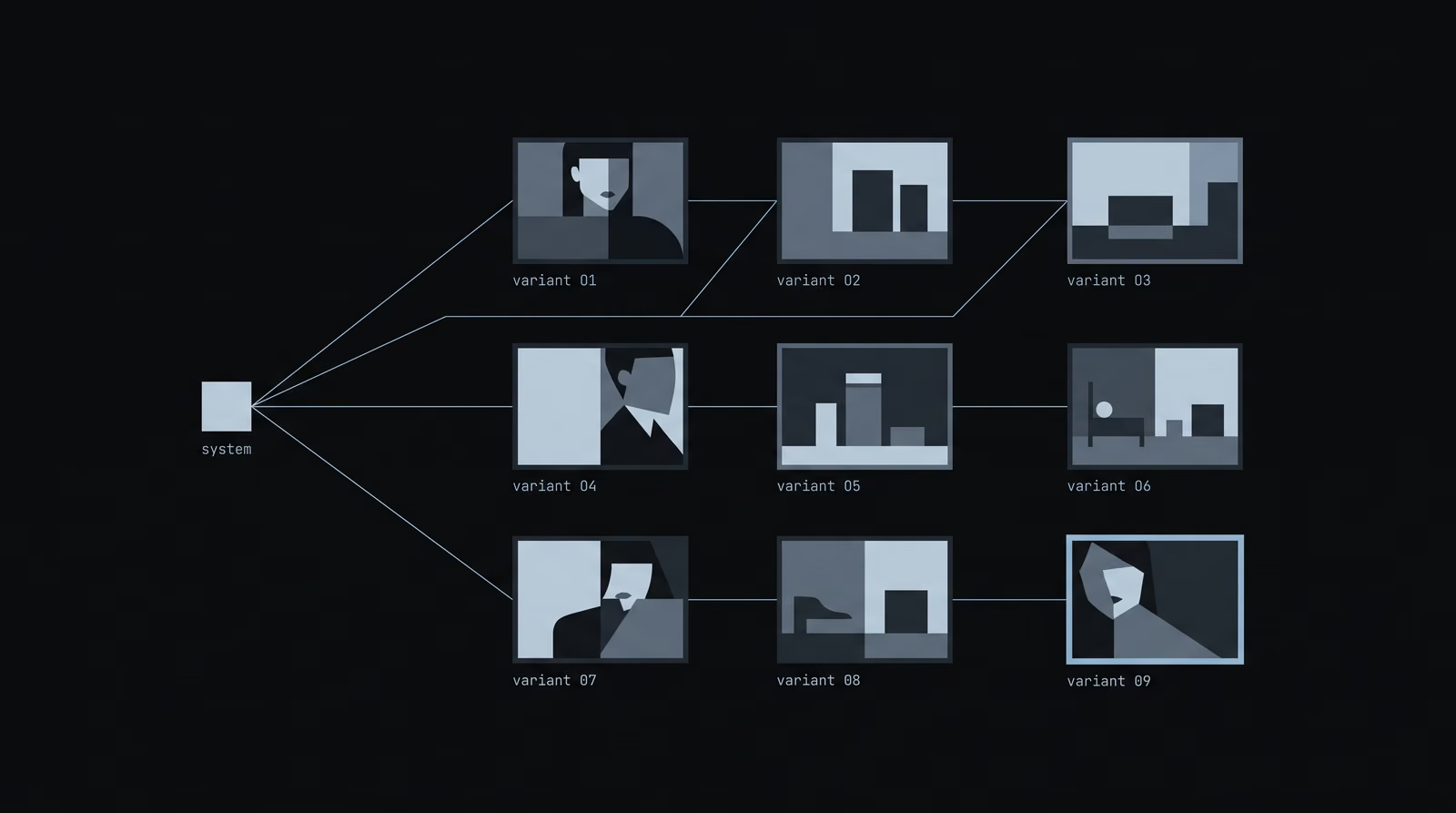
AI-generated visuals hold a brand's visual language when the model works inside a predefined brand system and is bound to an art direction. What decides the outcome is not the prompt you write but the rules the AI generates within: color, typography, composition and style. This touches the industry's biggest bottleneck — in Adobe's 2025 survey of 1,200 creative professionals, style and character consistency was named the number-one barrier to professional adoption of AI imagery. When the rules are clear, AI adds speed and scale; when they are missing, every image looks like it came from a different brand.
Why can an AI-generated visual look disconnected from the brand?
AI visuals look disconnected from the brand because the model drifts toward its own general aesthetic unless told otherwise. For the same brand, one image can come out warm and organic and the next cold and digital, because the model was never given the brand's color, tone and composition rules. Practitioners are blunt about the most common mistake: what does not work is writing longer prompts and hoping for consistency. The problem is not the model's quality — it is the absence of a framework around it.
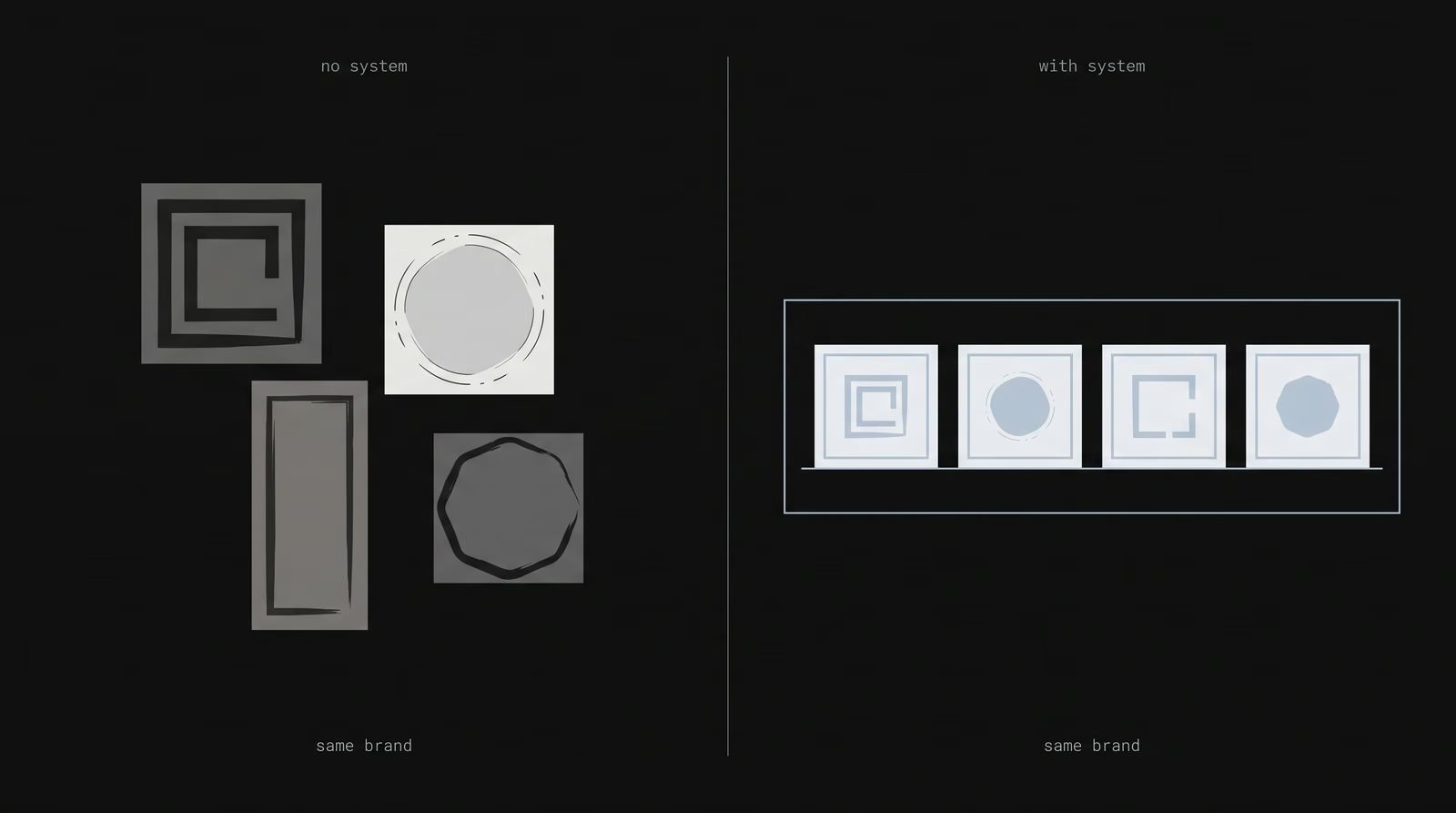
How do you achieve brand consistency with AI?
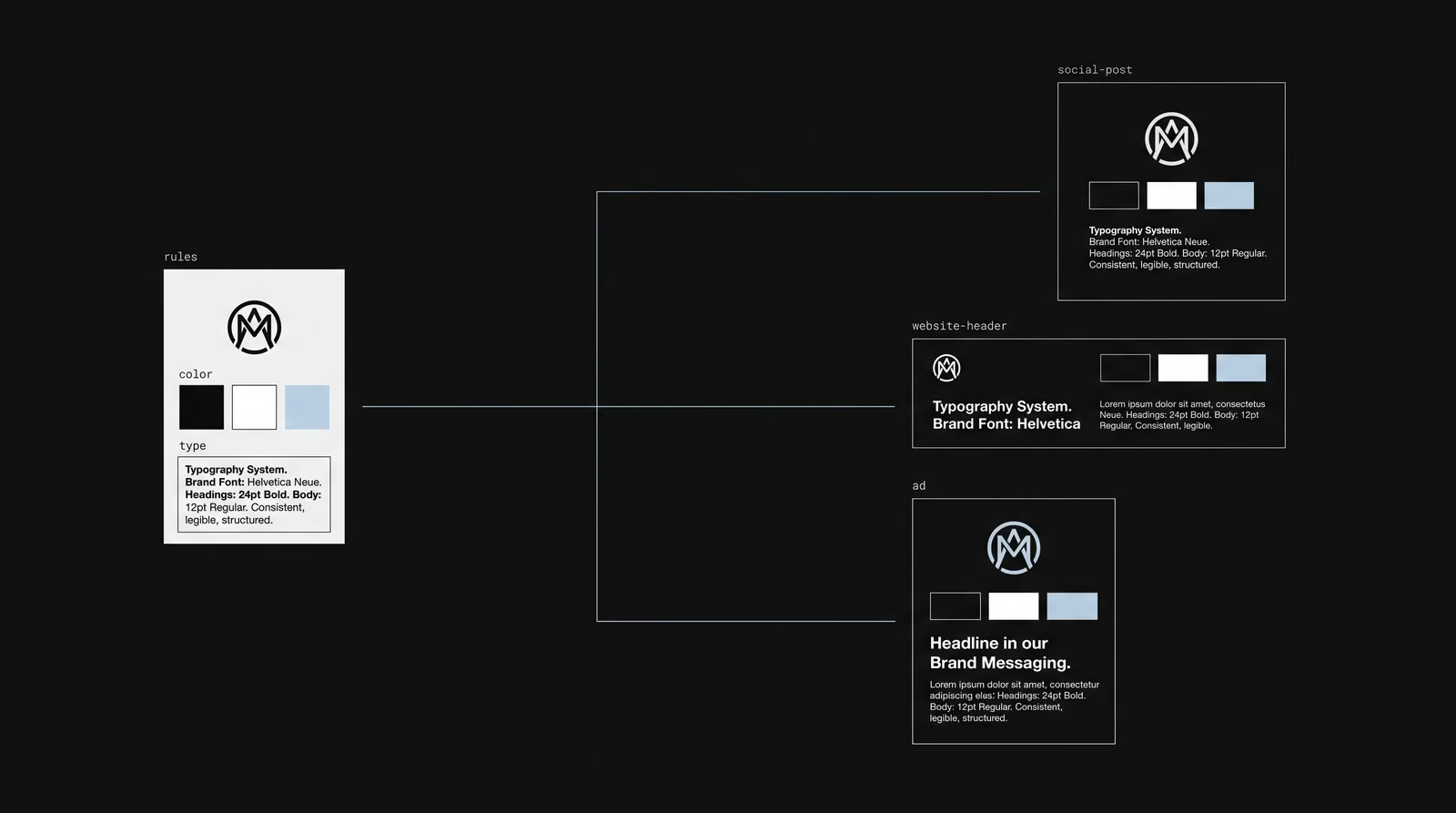
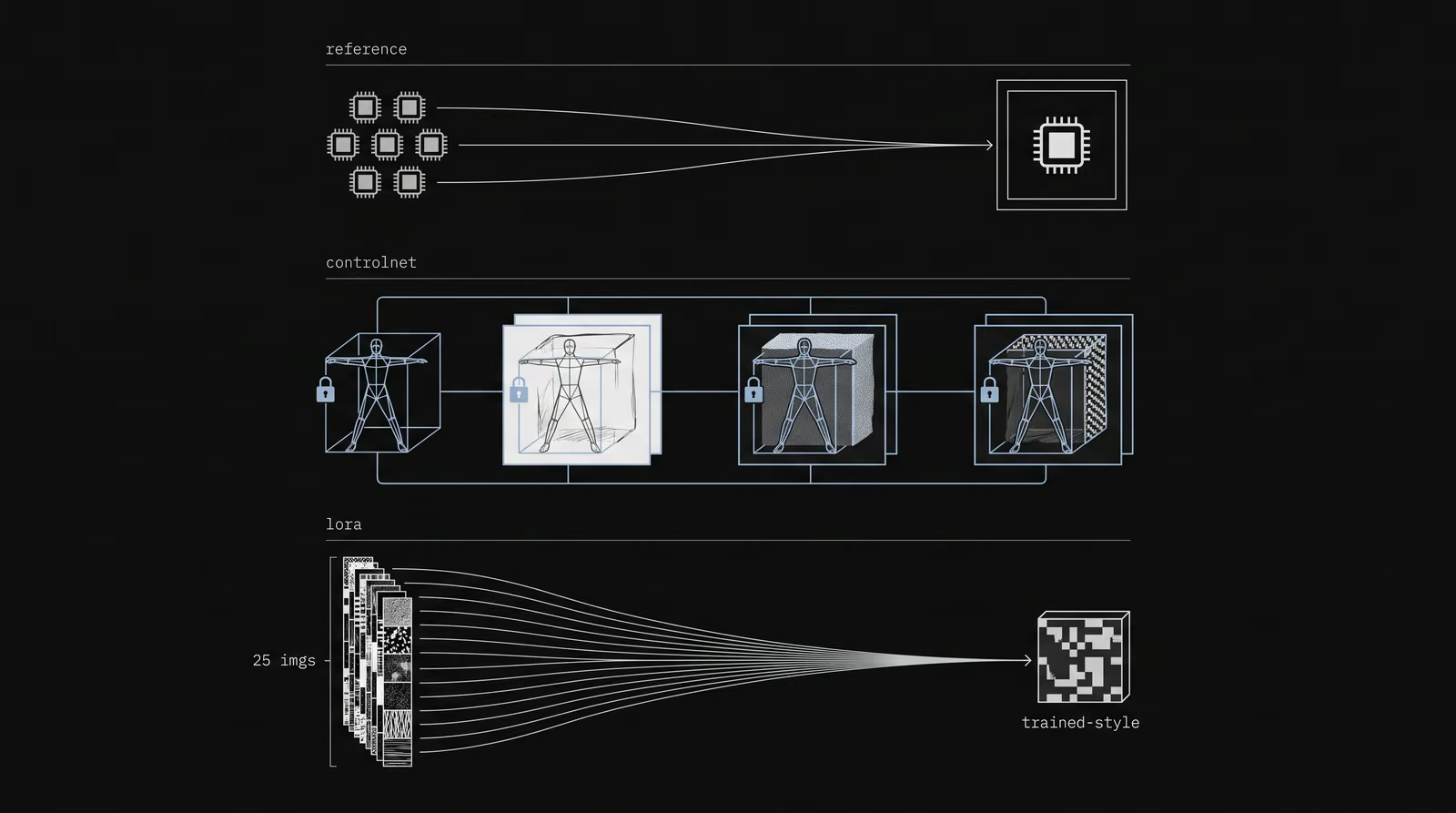
Brand consistency with AI is achieved by confining generation inside the boundaries of a brand system. The color palette, typography, photography style and composition rules are defined by a human first; the AI only produces variants within those limits. Today there are concrete techniques that make this real: reference images, ControlNet (locking structure and pose) and LoRA (training the model on the brand's style). Every output passes a human review against the brand rules before publishing. That way scale is preserved while off-brand images are filtered out.
How do you build an AI visual production system for a brand?
An AI visual production system is built by defining the brand rules first and the production flow second. Fix the brand system (color, typography, style, reference images), then choose tooling by volume. A practical threshold: if you produce fewer than 50 assets a month, a solid set of reference images is usually enough; above that, training a brand-specific LoRA is more robust. LoRA is a technique for fine-tuning a model on 15–30 brand images; one creator has documented training a brand-style LoRA from 25 images in 30 minutes for about $10, then generating hundreds of on-brand images from it. The result is not individual images but a line that can reproduce the same language over and over.
Why does art direction matter for AI visuals?
Art direction matters because it is the only thing that tells the AI not what to produce but within which frame to produce it. Directionless AI makes technically “good” but off-brand visuals; art direction binds that output to the brand's tone and purpose. As practitioners stress, consistency is not a prompt trick but an identity system: reference images, silhouette and style anchors, repair passes, and training when needed. The creative decision still belongs to the human; AI applies that decision at scale.
In AI image generation, is the prompt or the visual system more important?
In the long run, the visual system is more important than the prompt. A good prompt can produce one beautiful image, but consistency only comes from a visual system from which all prompts are derived. The tools confirm this: Recraft lets you build a custom style from 3–10 brand images and select it from a dropdown on every generation; Canva's Dream Lab uses Brand Kit images as a style guide; Midjourney's style reference does the same job. Their shared idea is identical: do not hoard seed numbers, fix references and styles. Without a system, every prompt starts from scratch and the brand scatters; with a system, the prompt becomes just a tool that applies the system.
How do you make different AI visuals consistent for the same brand?
Different AI visuals become consistent for the same brand when they are all produced from the same fixed references. A shared color palette, a repeating composition logic, a fixed style definition and the same reference images create a visible link between outputs. If you want to lock the structure itself, tools like ControlNet let you keep the product or pose in the same place in every frame. The variables are held under control; only the subject changes while the language stays fixed.
How can AI scale social media content?
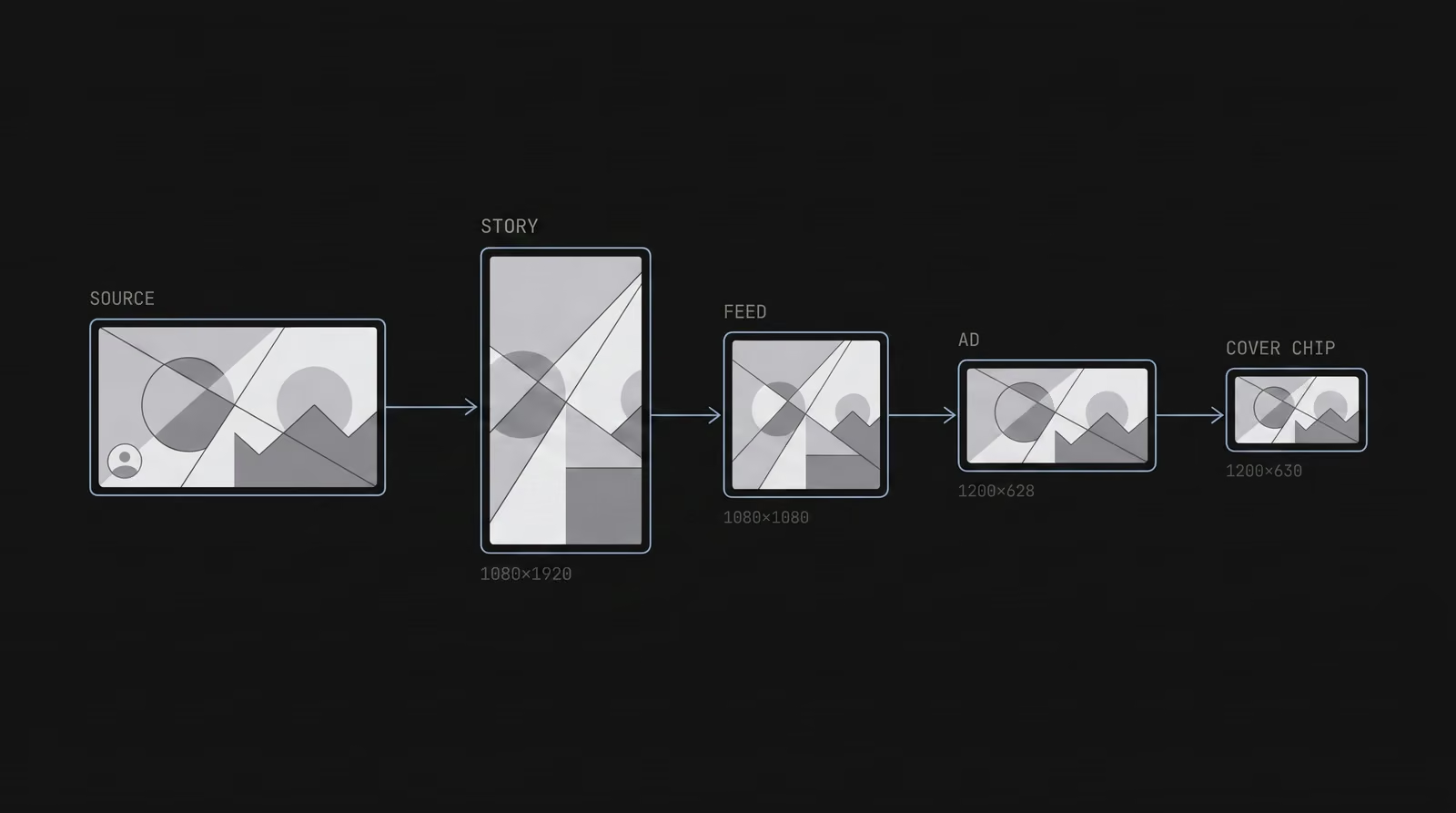
AI scales social content by quickly adapting a single idea into many formats. Adapting one campaign visual to story, feed, ad and cover sizes by hand takes a long time; in a well-built system, AI does it in minutes. That is exactly the promise of the AI image market projected to exceed $4.2 billion in 2026: not a more “creative” single image, but the ability to carry one idea consistently across more places. The gain is in speed and consistent volume.
What is the difference between AI automation and creative production?
Creative production makes the creative decision; AI automation repeats and multiplies it. Creative production is human work — concept, art direction and brand decisions. AI automation speeds up the execution of those decisions: variants, format adaptation, repetitive production. The best result comes from the division of labor: direction from the human, volume from the machine. This split is also a quality safeguard, because automation is only as good as the system the human built.