What Belongs in a Franchise Brand Kit?
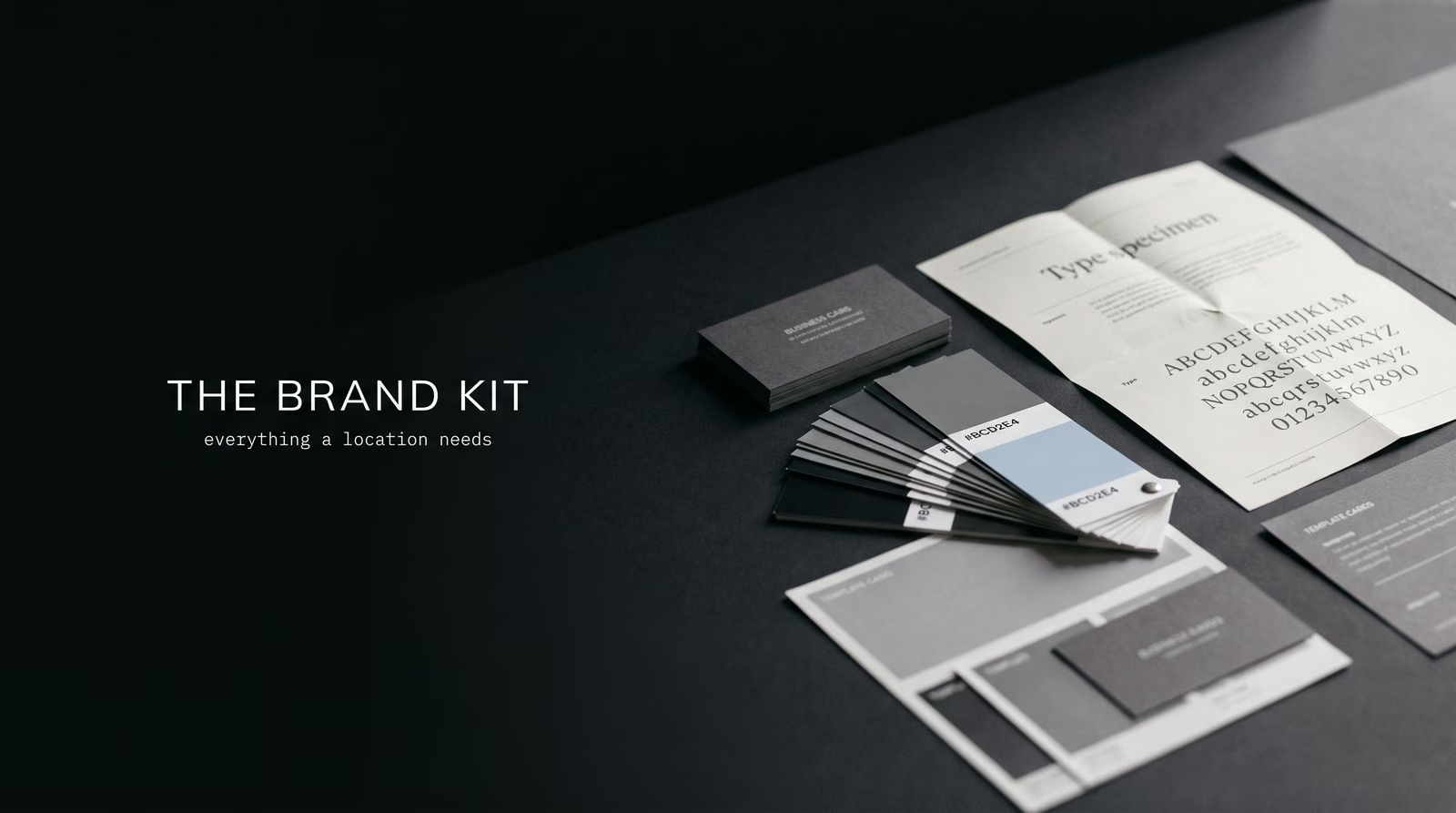
A franchise brand kit belongs to the locations, not to head office — so it has to contain whatever a location needs to produce something on-brand today, without asking permission. That means finished templates in the formats locations actually use, editable fields where local detail belongs, and locked fields where the brand lives. A folder of logo files is not a brand kit; it is the smallest part of one.
The distinction matters because a kit is judged by a single outcome: whether the on-brand option is faster than the improvised one. Everything below follows from that test.
What is a brand kit, and how is it different from brand guidelines?
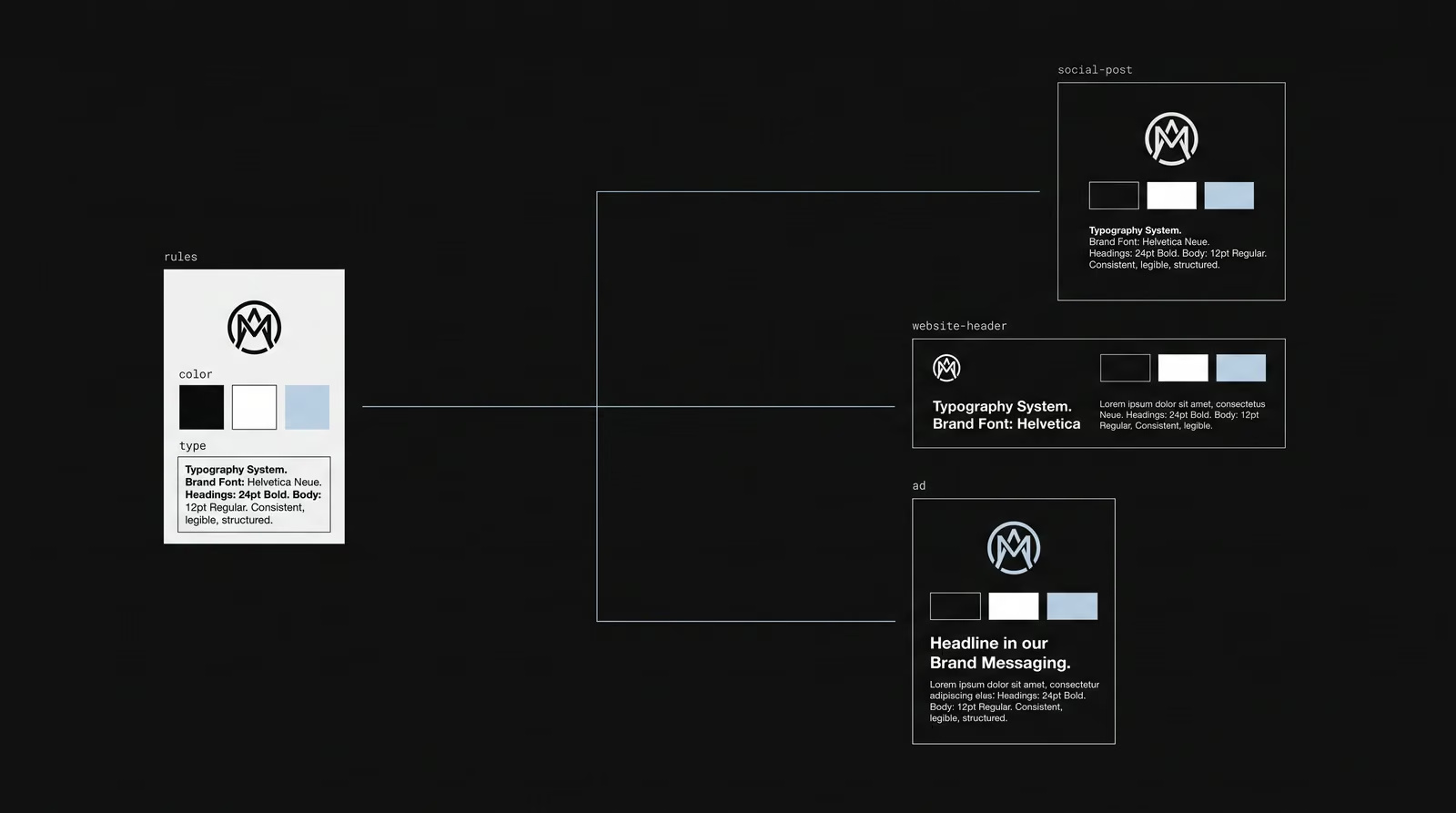
Brand guidelines describe the brand. A brand kit produces it. Guidelines say the logo needs clear space equal to the height of the mark; the kit is the file where that clear space is already built in and cannot be dragged smaller.
This is the difference between a document and a system, and it is where most franchise networks lose the argument. A location manager preparing a weekend promotion does not read a 40-page PDF. They open whatever file is closest to what they need. If your kit does not contain that file, the brand is decided by whatever the local print shop has on hand.
What has to be in the kit — the fixed layer
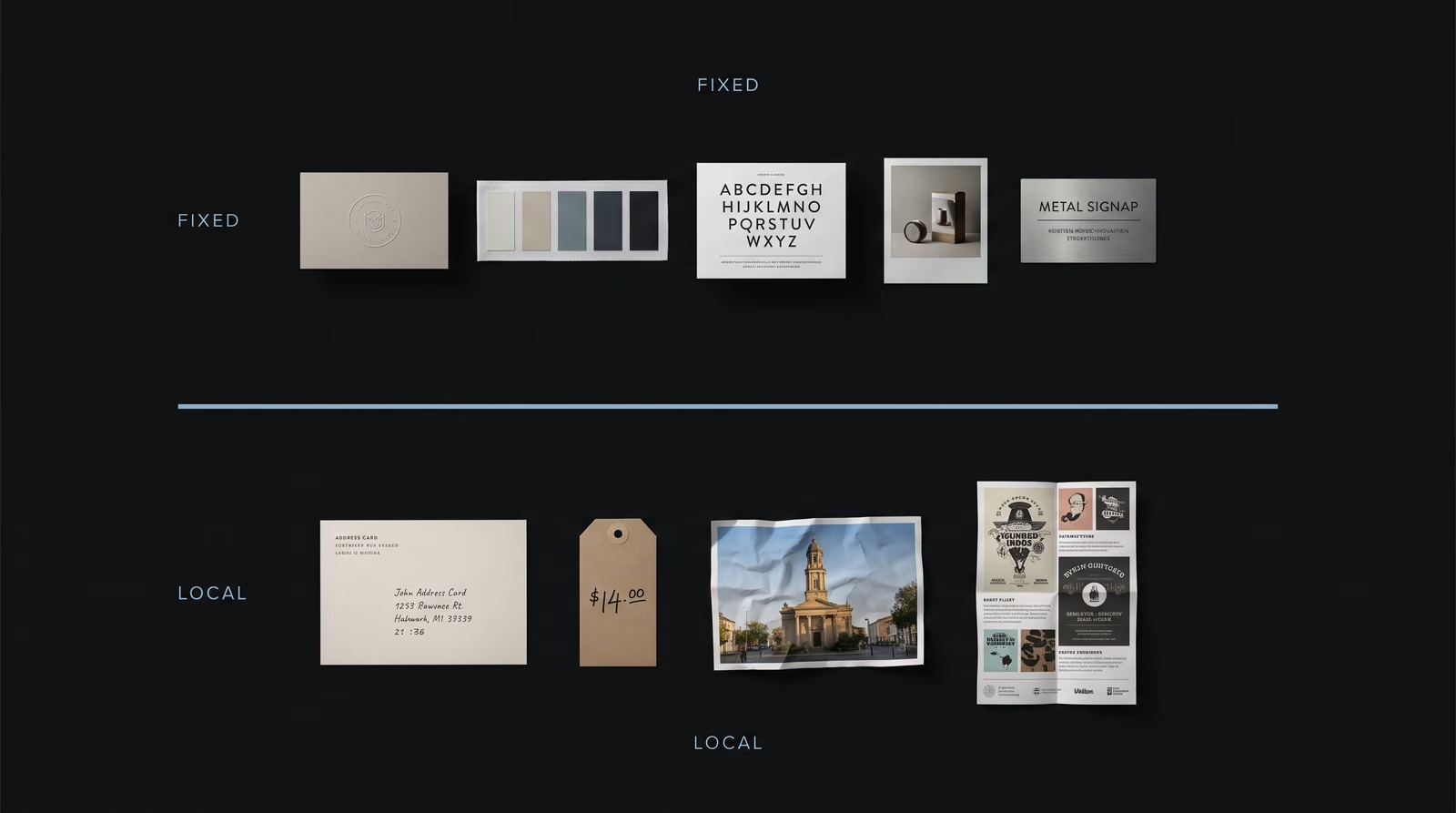
These are the elements that make the brand recognisable. In a kit they appear as assets, not as descriptions.
- Logo files in every version a location may need: primary, horizontal, stacked, single-colour, and a version that survives a small application. Each in both vector and raster.
- Colour values in the formats the location will actually paste: HEX for digital, CMYK for print, RGB for screens, and the ink or vinyl reference for signage.
- Type files with licences that cover the location's use, plus a fallback for systems where the brand font cannot be installed.
- Photography treatment as example images plus a preset or filter, not as an adjective. "Warm and natural" is not a specification; a preset is.
- Signage specification with material, finish and mounting detail — the element most often reproduced by a third party who has never seen the guidelines.
What has to be in the kit — the local layer
These are the fields a location fills in itself. They must be obvious and editable, because their absence is what drives locations off-brand.
- Address, opening hours, phone number and map link
- The offer or product featured in that market
- Local photography, shot to the fixed treatment
- Community, event and seasonal content
- Local language, dialect and cultural references
A kit that locks the local layer is as broken as a kit that unlocks the fixed one. The first produces workarounds; the second produces drift.
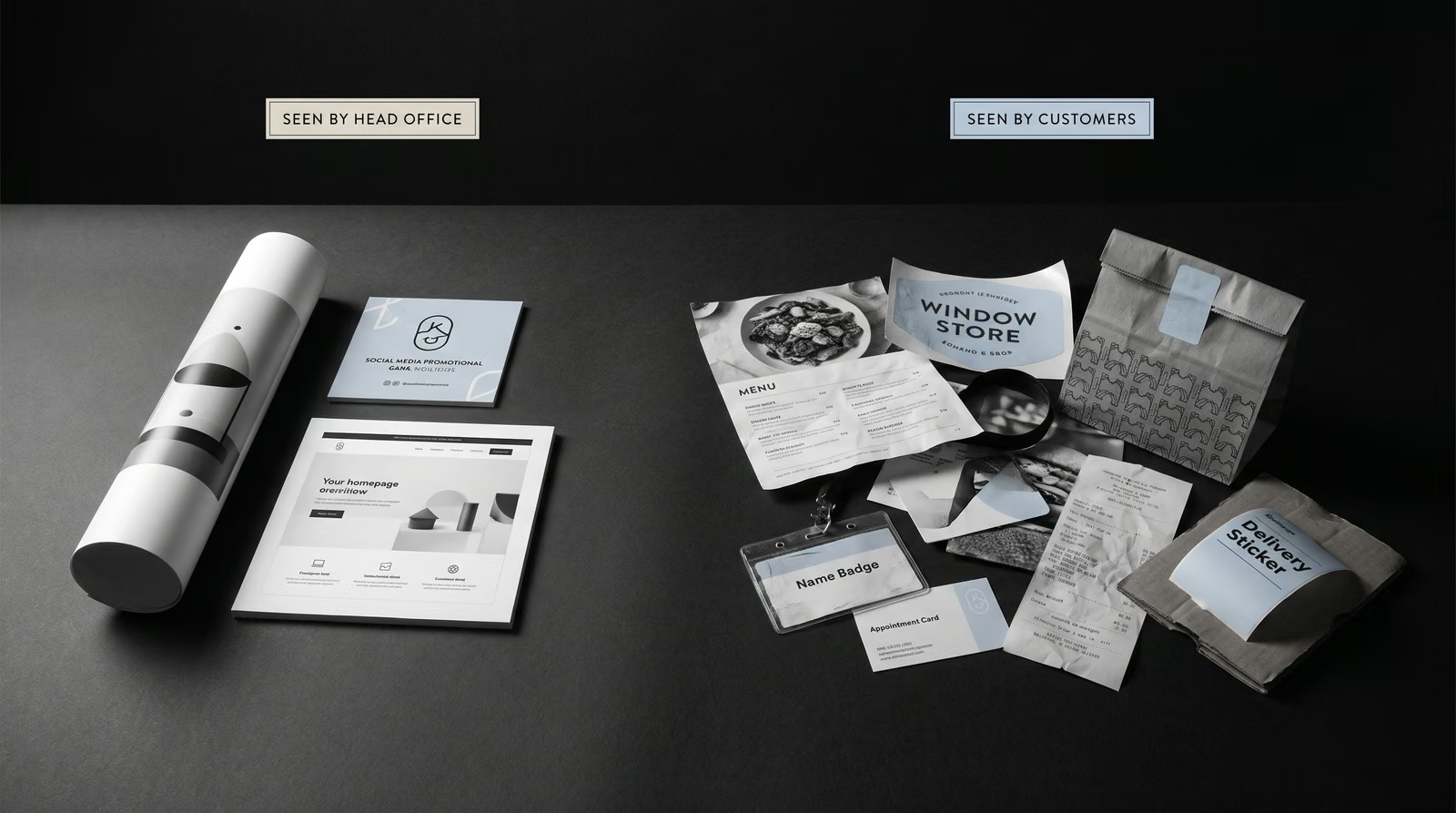
Which formats get forgotten?
Almost every brand kit covers the presentable formats and forgets the operational ones. The forgettable list is where inconsistency actually starts:
menu inserts, window decals, table tents, delivery bags, staff name badges, uniform embroidery, vehicle livery, local sponsorship boards, printed receipts, appointment cards, WhatsApp and messaging profile images, Google Business Profile covers, local newspaper ad sizes, and the internal templates nobody thinks of as brand material — invoices, price lists, staff notices.
The pattern is consistent: the formats that get forgotten are the ones head office never sees. They are also the ones customers see most often.
Why don't franchisees use the templates?
Because using them is slower than not using them. Every unused template fails at one of four points, and each has a specific fix.
**The file cannot be opened.** A layered design file is useless to a location without design software. Publish in tools the location already has.
**The template is buried.** If finding the right file takes longer than remaking it, it will be remade. Name files by what they are for, not by internal codes.
**The needed size is missing.** A location facing a deadline and a missing format will improvise. Cover the long tail of sizes, even the unglamorous ones.
**Approval takes longer than the opportunity.** A promotion that starts Friday cannot wait for a Monday review. Without a fast lane, the result is not a delayed asset — it is an unapproved one.
How do you organise the kit so people find things?
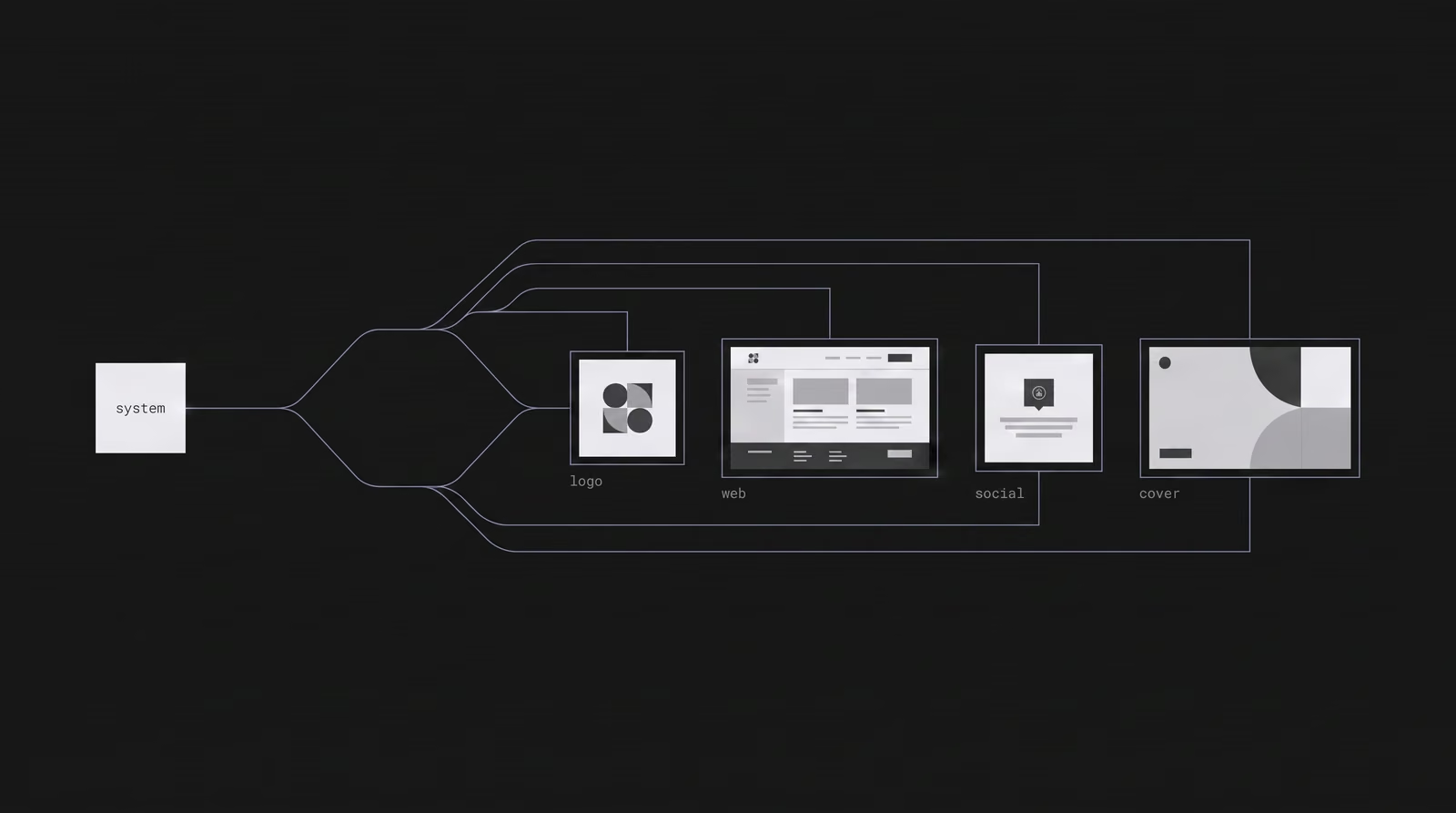
Organise by situation, not by asset type. A location does not think "I need a raster logo at 512px"; it thinks "I'm posting about a new opening."
A workable structure has one folder per situation — new opening, seasonal promotion, recruitment, local event, everyday social — and each folder contains everything that situation needs, including a copy of the logo file. Duplicating a logo across five folders costs nothing. Making someone hunt for it costs the brand.
How do you know if your kit is working?
Give a new location manager a realistic task and watch, without helping: *produce a post announcing that you open at 9am on Saturday.* Time it.
If it takes under ten minutes and the output is on-brand, the kit works. If they open a browser to find a stock image, ask a colleague where the logo lives, or rebuild a layout from scratch, you have found the exact gap — and it will be a missing format, an unopenable file, or an unclear edit field.
Repeat the test after every kit update. It is the only measure that reflects what actually happens in a location on a Friday afternoon.
Franchise brand kit checklist
- Does every logo version exist in both vector and raster, including a single-colour version?
- Are colour values published in HEX, CMYK, RGB and a signage reference?
- Do font licences cover the locations' use, and is there a documented fallback?
- Is the photography treatment shipped as a preset or example set, not as a description?
- Does a template exist for every format a location routinely needs, including the operational ones?
- Are editable fields obvious and locked fields genuinely locked?
- Are files published in tools the locations already have?
- Is the kit organised by situation rather than by asset type?
- Is there a fast lane for non-standard requests, measured in hours?
- Has the ten-minute test been run with someone who did not build the kit?