How to Maintain Visual Consistency Across Your Brand
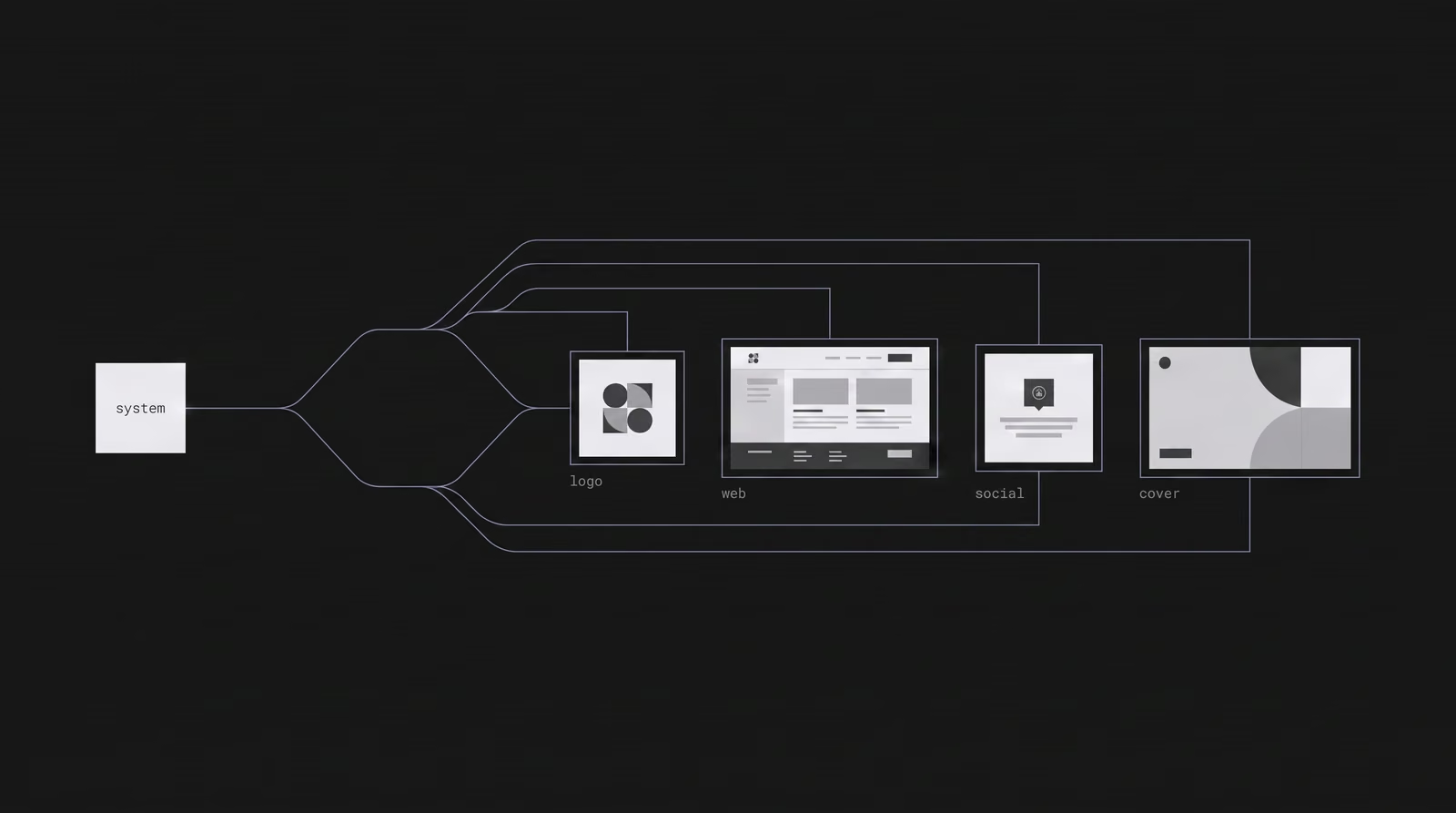
You maintain visual consistency by turning your identity into a system people work inside: fixed rules with exact values, templates that make the on-brand option the fastest one, a single place approved assets live, a light check before anything publishes, and a regular audit that catches drift. The hard part is not defining the look. It is holding it while volume grows and more hands touch the brand.
Why does visual consistency break down over time?
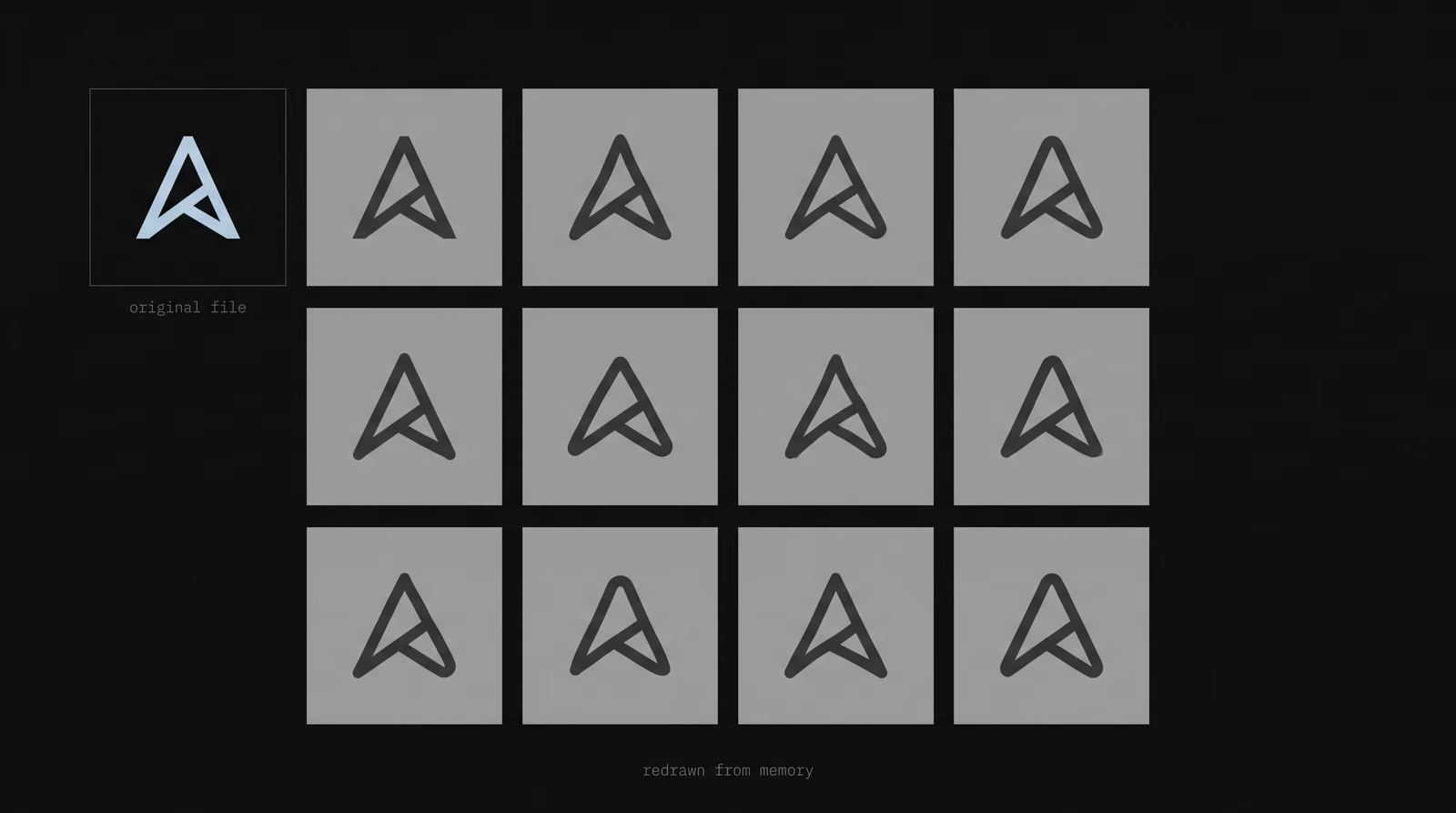
Consistency breaks because the number of people producing brand assets grows faster than the system that guides them. Brand content is now made by internal teams, regional offices, agencies, partners, freelancers and AI tools at once, and every new contributor adds another interpretation of the rules. Nothing dramatic happens in a single asset. A slightly different blue here, a recreated logo there, and within a year the brand has quietly become several brands.
Two specific failures do most of the damage. The first is friction: when approved material is slow to reach, people build their own. In one survey, 83% of employees said they had recreated a marketing asset simply because they could not find it, and a recreated asset is almost never an exact match. The second is process fatigue — 71% of brand professionals report that approving a single on-brand asset takes seven or more people, and 59% say content is often published without finishing that cycle. Heavy governance does not produce consistency; it produces workarounds.
What has to be fixed before you can maintain anything?
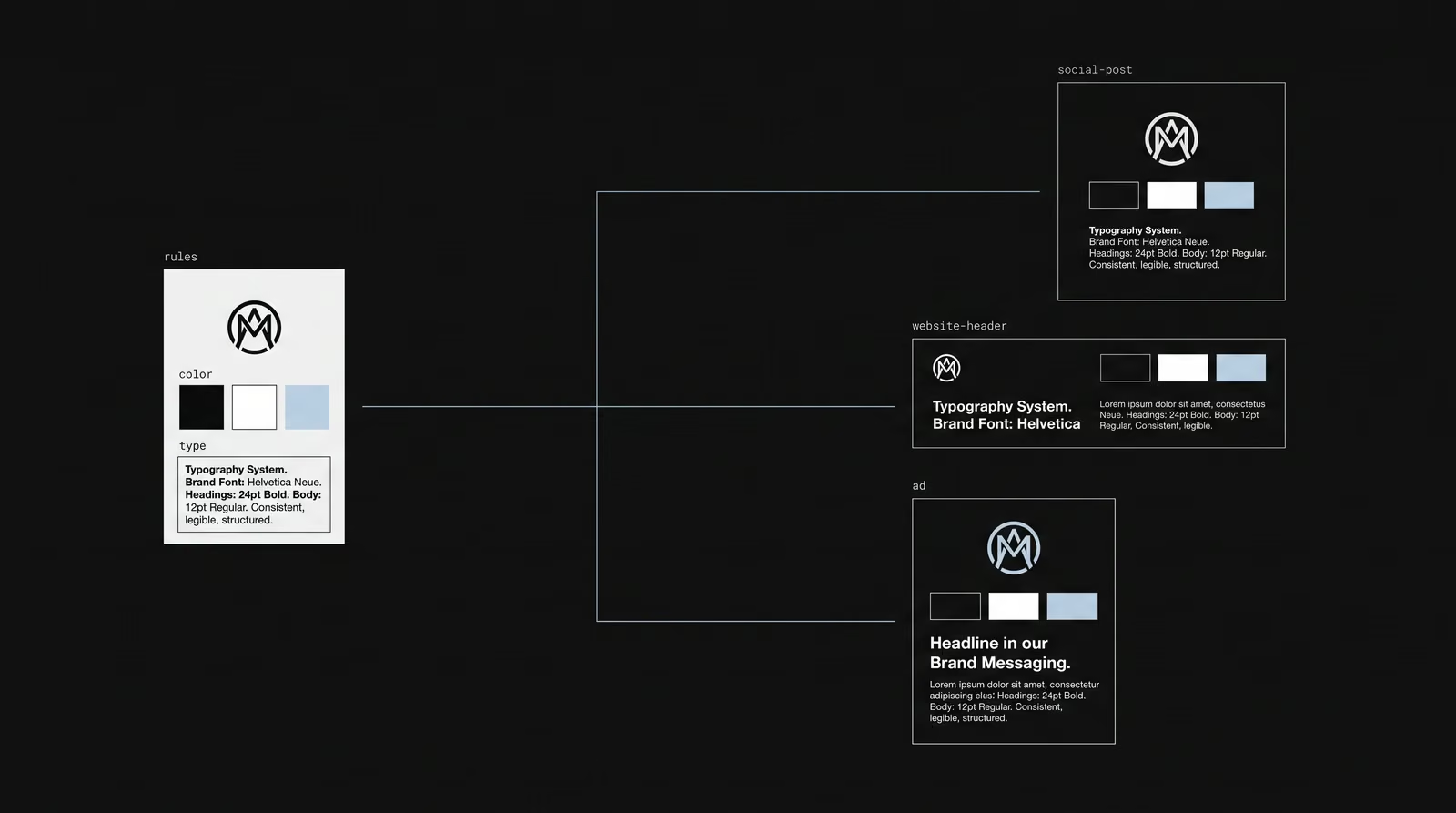
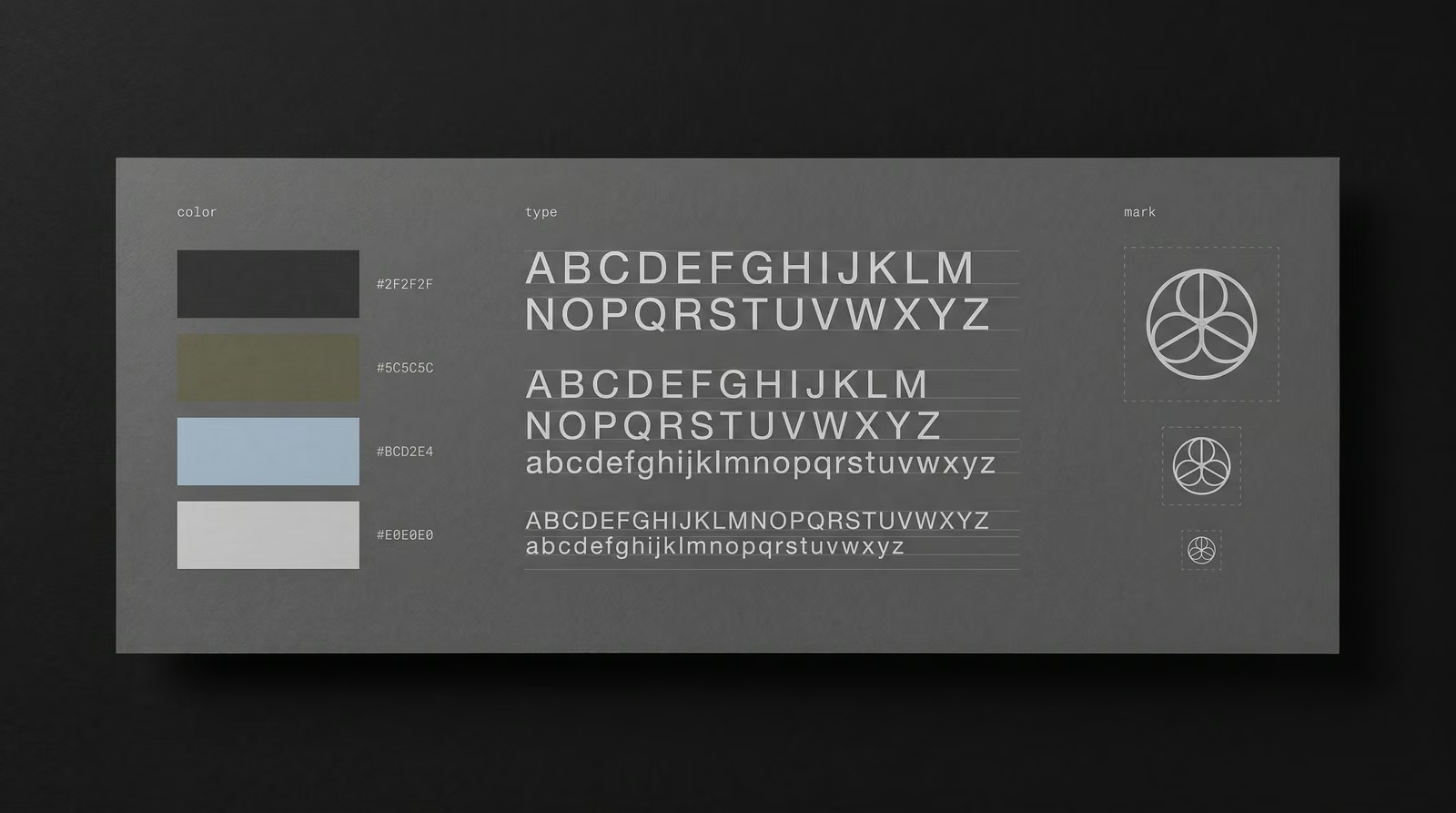
You can only maintain rules that are specific enough to check. Vague direction (“keep it clean and modern”) cannot be enforced, so the fixed layer has to be written as values a reviewer can verify: exact logo versions and their minimum sizes, exact HEX codes with no per-project tints, named type families with a defined hierarchy, an imagery treatment (lighting, crop, color grade), and shared grid and whitespace rules.
Write these as decisions, not preferences. “Primary logotype on light surfaces, mark only below 48px” is maintainable. “Use the logo tastefully” is not. Everything outside that fixed layer — copy, subject, format — should be free to change, because a system that tries to fix everything gets abandoned the first time someone needs something it did not anticipate.

How do you make on-brand the easiest option?
The reliable way to hold a visual system is to build the rules into the tools people already use, so that following them takes less effort than breaking them. In practice this means templates where the brand-critical layers — logo placement, palette, type styles, grid — are locked, and the editable fields are the ones that should change per post. Non-designers then produce correct work without a design review, and designers stop absorbing repetitive requests.
External contributors need a smaller version of the same thing. A partner or freelancer kit — approved logo files, palette values, type files, two or three templates, and a one-page do/don't sheet — prevents the most common source of off-brand work, which is a capable outsider guessing at your rules. Lucidpress research found 81% of companies deal with off-brand content creation, and that share grows once partners and freelancers are in the mix.
Where should approved assets live?
Approved assets belong in one findable place that is the only place anyone is expected to look. The failure mode is scattered storage — a drive here, a chat thread there, an old campaign folder nobody has permission to open — because that is what pushes people into recreating files. A central library also solves version control: there is one current logo, and last year's version simply is not available to grab by accident.
The operational payoff is measurable. MediaValet's 2025 DAM Trends Report found organizations using a digital asset management system save an average of 13.5 hours per week on asset tasks — about 4.5 hours searching, 4 hours sharing and 5 hours avoiding duplication. You do not need enterprise software to get the effect at a small scale; you need one library, named clearly, with the current files in it and the old ones archived out of reach.
Who checks the work, and when?
The check should happen where the asset is made, not after it is finished. Late review is expensive and unreliable: problems introduced during briefing, templating or AI generation only surface once significant work is invested, so teams spend their time on rework instead of creation. Content Marketing Institute's 2025 enterprise research found the defining trait of high-performing programs is not output volume but how tightly they govern — clearer roles and coordination at every stage.
For most brands the right weight is one owner and one short list. Name a single person accountable for visual consistency, and give everyone a pre-publish check they can run in under a minute: correct logo version, exact palette, correct type styles, consistent image treatment, template not overridden. One accountable reviewer with a five-item list beats a seven-person approval chain that people learn to skip.
How do you keep AI-generated visuals inside the system?
AI visuals stay consistent only when the model is given a fixed reference instead of a longer prompt. Each generation is independent, so style, color and framing drift between outputs no matter how detailed the wording is. For low volume, reference images and locked style settings hold a set together; for higher volume, a small style model trained on your own brand images reproduces the look repeatedly.
This is now a maintenance problem rather than an experiment. In HubSpot's 2026 State of Marketing report, nearly 75% of marketers said they use AI for media creation including images and video — which means AI output is a mainstream input into the brand and has to pass the same pre-publish check as anything else. Treat generated images as drafts from a new contributor: useful, fast, and not exempt from the rules.
How often should you audit your brand's visuals?
A quarterly audit is enough for most brands, and it should look at real published work rather than the guidelines. Pull the last three months of live assets — social posts, site pages, ads, decks, email — and place them side by side. Consistency problems are almost invisible one asset at a time and obvious in a grid.
Then fix the cause, not the asset. If three posts used the wrong blue, the useful action is correcting the template and the library, because the same mistake will otherwise reappear next month. Audits are also where you notice a rule that keeps getting broken for a good reason — a format the system never covered — which is a signal to extend the system rather than police it harder.
Maintenance checklist
Run this as a standing routine rather than a project. Each item is a habit, not a one-off task:
- Fixed layer written as exact values: logo versions, HEX codes, type families and hierarchy, imagery treatment, grid.
- Templates for every recurring format, with brand-critical layers locked and content fields open.
- One asset library holding current approved files; outdated versions archived out of reach.
- Partner and freelancer kit for anyone producing work outside the team.
- One named owner accountable for visual consistency.
- A five-item pre-publish check anyone can run in under a minute.
- AI visuals generated from reference images or a trained style model, then checked like any other asset.
- Quarterly audit of live work, with fixes applied to templates and the library, not just the individual asset.